
For example, automotive interior fabrics include seats, headliners, door panels, and carpets. In addition, most use polyester fabrics with good abrasion resistance and high strength. Moreover, if a vehicle catches fire, the burn rate of interior materials directly affects escape time. Therefore, for dyeing and finishing plants, flame-retardant finishing of polyester automotive interior fabrics must meet strict automaker flame-retardant grades. In addition, it must also balance wash durability, hand feel, and shade. Consequently, applying a Polyester Automotive Interior Flame Retardant is a key technical step for this challenge.
Why Does Polyester Automotive Interior Flame Retardant Matter for Dyeing and Finishing Plants?
For instance, car interiors are small and full of combustible materials. Moreover, if interior fabrics lack flame retardancy, fire spreads quickly and produces molten drips that ignite other parts. In addition, polyester fibers are thermoplastic and melt and drip easily. Therefore, untreated polyester interior fabrics rarely pass strict flame-retardant tests.
What Flame-Retardant Methods Do Dyeing and Finishing Plants Use?
Currently, three main methods give fabrics flame retardancy.
First, the flame-retardant fiber method adds flame-retardant components during spinning. The effect lasts, but costs are higher and fiber choices are limited.
Second, the coating method coats a flame-retardant layer on the fabric surface. The process is simple, but it may affect hand feel and breathability.
Third, the pad finishing method applies a flame retardant through padding. This mature process fits existing setting equipment in dyeing and finishing plants. It is a common flame-retardant finishing method for automotive interior fabrics.
How Does Polyester Automotive Interior Flame Retardant Work?
Texnology®ZRJ Polyester Automotive Interior Flame Retardant uses pad finishing. When treated fabric burns, the flame retardant promotes dehydration and carbonization of polyester fibers. It forms a non-combustible carbon layer on the surface. This layer blocks heat and oxygen from reaching the fiber interior and slows the burn rate. Meanwhile, it releases non-combustible gases that continuously lower oxygen concentration around the flame. This suppresses flame spread until the flame self-extinguishes. The combined condensed-phase and gas-phase mechanism effectively controls the burning behavior of polyester interior fabrics and reduces the risk of molten drips igniting other materials.
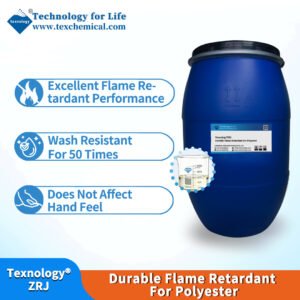
Treated polyester automotive interior fabrics keep durable flame retardancy. The finish has little effect on shade or hand feel. It runs through conventional pad-setting processes without equipment changes. Only the right flame retardant matched to polyester characteristics can help seat, headliner, and door panel fabrics meet strict automaker flame-retardant requirements. In short, dyeing and finishing plants gain a practical route to safer automotive interiors.
About Guangzhou Lianzhuang Technology Co., Ltd.
Guangzhou Lianzhuang Technology Co., Ltd. has focused on R&D and production of textile functional finishing agents for 19 years. Its innovative finishing technologies give textiles richer and more diverse functional value. A professional development team and a scientific quality management system support its work. The company provides textile, dyeing and printing, and garment enterprises with efficient, stable functional solutions that strengthen product competitiveness.