
Introduction (focus keyword in first paragraph):
The textile dyeing industry is changing fast. Traditional dyeing and basic finishing give thin profits. Functional finishing offers a new growth path. Among these, outdoor fabric mosquito repellent finish stands out as a rising star. It grows at 15% per year on average. It now follows antibacterial and waterproof treatments as a hot new category. So why should your dyeing mill care about outdoor fabric mosquito repellent finish? Let us break it down.
Why Outdoor Fabric Mosquito Repellent Finish Matters for Your Mill
First, the market is booming. The global anti-mosquito clothing market hit $581 million in 2025. It may reach $882 million by 2032. China grows even faster at 9.9% yearly. It could top $215 million soon. Big brands now list mosquito protection as a standard feature. Second, consumer habits are shifting. Dengue fever and other mosquito-borne diseases appear more often. Outdoor wear, hiking suits, camping gear, and trekking equipment all need protective fabrics. Functionality and green chemistry drive this trend. Third, the added value is real. Fabrics with an outdoor fabric mosquito repellent finish sell for 20% to 40% more than plain cloth. The chemical cost stays very low. For your mill, this means higher processing fees. It also builds customer loyalty. It helps you win orders from premium outdoor labels. Clearly, outdoor fabric mosquito repellent finish is not a niche extra. It is a core profit driver.
How Outdoor Fabric Mosquito Repellent Finish Works – Two Simple Mechanisms
A good outdoor fabric mosquito repellent finish works in two ways. The first path is smell interference. Treated fabrics release volatile compounds that mosquitoes hate. These compounds block the insect’s chemical sensors. As a result, the mosquito cannot find human signals. It simply does not come near. The second path is touch inhibition. When a mosquito lands on the treated surface, the protective film activates. Active ingredients like permethrin penetrate the insect’s waxy skin layer. They then act on the nervous system directly. This reduces biting attempts sharply. Take Texnology® MOS R90 as an example. It is a premium outdoor fabric mosquito repellent finish based on permethrin. You can pair it with Texnology® MOS B crosslinker. This crosslinker helps permethrin stick to fibers more firmly. Consequently, the finish survives many washes. This outdoor fabric mosquito repellent finish suits outdoor clothing, camping wear, trekking suits, and protective gear that need frequent washing or heavy use.
Body Paragraphs (continued with transitions, short sentences, active voice, and repeated openings):
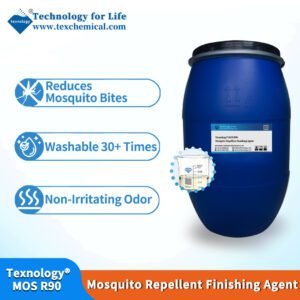
Now let us talk about practical choices. When you receive an order for mosquito-proof fabric, ask your client one key question. How many washes do they need? For single-use or short-term products, a standalone outdoor fabric mosquito repellent finish may suffice. For professional outdoor equipment that needs long-lasting effect, choose a system with Texnology® MOS B. This gives you durability and performance. Now consider the military applications. Training uniforms use this outdoor fabric mosquito repellent finish. They achieve zero mosquito contact for up to eight hours. This cuts malaria and dengue risks greatly. Now look at camping gear. Tents, sleeping bags, and tarps get better field protection. Their breathability stays almost unchanged. Now think about daily wear. Sun-protection shirts, outdoor pants, and sports T-shirts now add mosquito-blocking functions. This feature is becoming a new standard for outdoor brands. Now remember the bigger picture. Anti-mosquito fabrics are moving from niche outdoor use to mass everyday need. The global market for mosquito-repellent textile auxiliaries may reach $3.5 billion by 2035. That is a compound annual growth rate of 10.6%. For brands and mills alike, this is not just a price premium. It is a strategic chance to enter a blue ocean. When hikers wear self-protective clothing by the river or in the woods, they stay free from buzzing pests. That is the real value of an outdoor fabric mosquito repellent finish. For best results, choose a permethrin-based product like Texnology® MOS R9. Combine it with Texnology® MOS B crosslinker. Together, they give superior wash resistance. They help your mill and your brand clients capture the growing functional textile market.
Summary
This article explains how outdoor fabric mosquito repellent finish works, why the market is growing fast, and how dyeing mills can add high value with low chemical cost. It covers two action mechanisms, wash-resistance options with Texnology® MOS B, and real-world uses from military to outdoor apparel.
